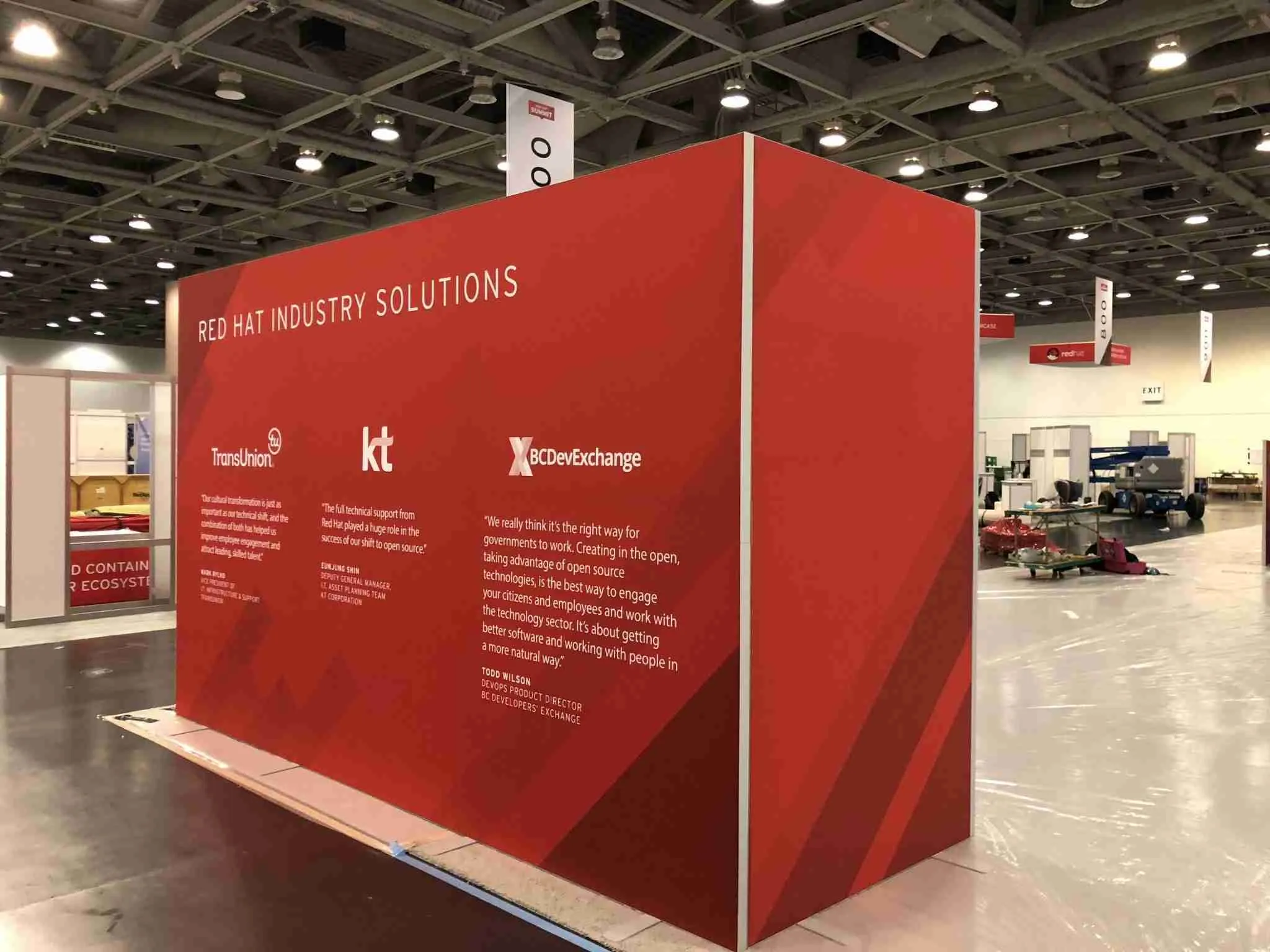
The Louisville event landscape
Louisville is a working trade show market. Its anchor venues host hundreds of events a year, and the rhythm of load-in, show hours, and strike is well-established across the local vendor base.
Exhibitors pulling back on budget in Louisville still have to show up in the same booth neighborhoods as their competitors. Scope gets tighter; standards don't. The booths that land well are the ones built on a specific plan, not a generic template.
Louisville Tourism reported in December 2024 that Louisville was named a U.S. Destination of the Year and also collected convention-industry recognition from ConventionSouth and Meetings Today.
Louisville Muhammad Ali International Airport reported that SDF ranked No. 5 in the world and No. 3 in North America for cargo operations in 2024, reinforcing the city's freight and logistics advantages for show movement — a useful reference point when sizing a project.
UPS Worldport, SDF cargo strength, and the I-64/I-65/I-71 triangle make Louisville especially credible for freight, warehouse, transportation, and supply-chain event work. That makes logistics and supply chain exhibitors one of the anchor audiences for exhibitors working Louisville.
Louisville venues we work
Louisville events cluster around a small number of venues, and each one has a different personality on the floor.
Across the Louisville venue set, what changes between buildings are the labor model, the rigging approval path, the drayage setup, and the published move-in window. The plan has to match the specific building.
Hilton Lexington/Downtown is one of the anchors. Located at 369 West Vine Street, Lexington, KY 40507.
The hotel has 18 meeting rooms and several pillarless ballrooms and breakout areas.
Lexington Griffin Gate Marriott Golf Resort & Spa. Located at 1800 Newtown Pike, Lexington, KY 40511.
Louisville Slugger Field: louisville Slugger Field is a 13,131-seat minor league baseball stadium located in downtown Louisville near the waterfront.
Operational rules on the Louisville floor
Louisville floor operations follow the venue's own manual. Dock timing, utility orders, rigging, and crew calls all come out of that document.
The workable version of Louisville labor planning is boring on purpose: read the manual, match the scope to its categories, order what the venue sells directly, and schedule everything else around its posted windows. Surprises almost always trace back to a step someone skipped.
Kentucky Exposition Center — Venue-run exhibitor forms for labor and equipment, utilities, internet, and other ordered services, which supports describing the campus as service-order-driven rather than assuming one generic labor model.
Practical planning rules for Turnkey Trade Show Services in Louisville: Hotel ballrooms, stadium spaces, and civic venues are best described with venue-specific operating plans rather than exposition-hall assumptions. Trade show labor, AV, logistics, and installation teams are coordinated against the current building rules and show contractor workflow before move-in begins.
The main Louisville event areas
Waterfront, Butchertown, West Louisville, Ohio River edge form the Riverfront and Activation Band cluster. This cluster matters for stadium, arena, civic, and hospitality-based activations at venues such as Lynn Family Stadium, KFC Yum! Center, and Norton Healthcare Sports & Learning Center.
Regional Extension Ring runs across Southern Indiana, Bullitt County, Shelby County. Regional coverage into Southern Indiana and Lexington widens the service footprint without forcing fake long-range claims.
Line items on a typical project
A full engagement covers scope development, fabrication or rental, graphics, show services, logistics, and on-site execution from move-in through dismantle.
Typical line items include booth structure (custom or rental), graphics and print, AV and lighting, show-service orders (power, internet, rigging), labor calls against the venue's rules, freight both ways, on-site supervision, and post-show closeout documentation.
Good execution comes from keeping the team small and the handoffs short. Every extra vendor in the chain adds a communication layer and a place where details get lost.
For programs that repeat, asset management becomes part of the engagement — storage, graphic rotation, refurbishment, and re-crating are planned rather than one-off.
What an engagement actually looks like
Every project starts with a scope conversation: the show, the venue, the booth number, the dates, and the budget frame. Ten minutes of specifics produces a better plan than a week of generalities.
Once scope is clear, the venue work begins. Exhibitor manual, dock times, utility order IDs, rigging submissions for hanging elements, and labor calls all get locked against the venue's actual rules.
Production brings the plan into physical form: fabrication, graphics, AV, rentals, and the named lead who will run the floor.
One named show-site lead runs the install. Not a rotating crew and not a remote account manager — one person holds the floor plan, the punch list, and the labor calls from crates to doors.
Show-hours coverage is part of every engagement — not a premium add-on. On-floor support keeps the booth running while the client team runs the pipeline.
Closeout is tight: strike, crate, manifest, storage designation, and a written post-show report delivered within a day. That document drives the next booking.
What it costs and how fast it moves
An honest quote itemizes the variables. There is not a single price — there is a configuration.
Cost scales with how it is built, how big it is, what the venue charges for its own services, what the graphics look like, how far the crates travel, and how many days the team stays on-site.
On timing: custom builds for Louisville shows run best with 16 to 20 weeks of lead time. Rental programs run on 8 to 12. Anything inside 4 weeks is a rush, which means fewer options and a premium on materials.
What a successful project looks like
A project runs well when install clears the venue's published window, all show services land as ordered, the booth performs across every show day without pulling the client team off pipeline work, and strike clears the dock before the next occupant loads in.
Trade show ROI is measured at the lead and pipeline level. The show-floor execution either protects or undermines those numbers.
The post-show debrief is where the numbers get connected back to the physical booth. Which demo station drew traffic, which meeting area closed more conversations, which graphic zone attracted dwell time — that feedback shapes the next build rather than getting lost.
How we're built to run your project
Trade Show Services of Louisville is Louisville's local trade show team, with in-house design, fabrication, graphics, and show-site crews. One shop, one point of contact, one accountable lead on every project.
Local fabrication means real-time problem-solving. A graphic that needs to be reprinted at 6 a.m. On install day is a same-morning fix, not a three-day shipping delay.
Clients who run repeat programs across multiple dates end up paying less per event when the same team handles everything. Less re-briefing, less re-training, less re-checking — the operational overhead drops year over year.
Common questions
Do you work at Louisville Marriott Downtown?
Yes. Located at 280 West Jefferson, Louisville, KY 40202. Projects at that building are planned against its specific floor rules.
How does labor work in Louisville?
It runs venue by venue. At Kentucky International Convention Center, kICC event-planning materials note that exclusive service providers can change and that required staffing and event services are confirmed with the assigned event manager. Other Louisville venues have their own published rules, and the plan matches the specific building.
How much lead time is ideal?
Custom builds run best with 16 to 20 weeks of lead time. Rentals take 8 to 12 weeks. Work inside 4 weeks is possible but raises costs and narrows the options.
What information kicks off a project?
The show, the venue, the booth number, the dates, and a target budget range. From those, an initial scope and a realistic cost come back within a few days.
Who runs the booth on-site?
One named show-site lead runs the install, the show hours, and the strike. That person carries the floor plan and the punch list from crates to doors and reports up once a day.
Can the booth travel to the next city on our calendar?
Yes — builds are designed for modular reuse unless single-use scenic is specifically required. Same structure, swappable graphics, standard crates. Louisville programs that roll to another city on the same calendar get handled end to end.